
Analysis
What does science in India feel like?
Indian society has inhabited at least three distinct structures of feeling in relation to science since independence — and they are not as continuous as one might expect.
Analysis
Indian society has inhabited at least three distinct structures of feeling in relation to science since independence — and they are not as continuous as one might expect.
Analysis
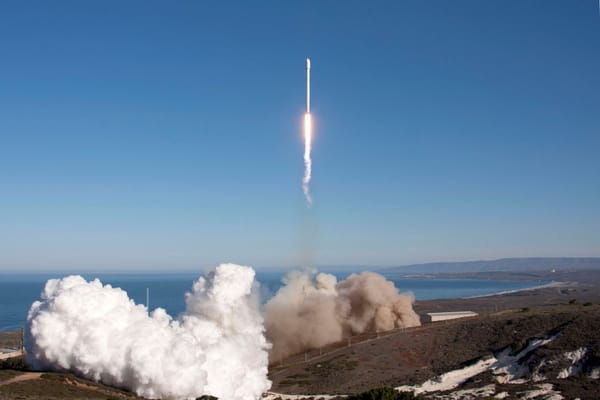
In a study published in PNAS Nexus on July 14, two researchers affiliated with institutes in France, Italy, and the UK analysed more than 4,400 launches in 16 geographical entities and with 330 rocket configurations to find that every time the cumulative payload sent to orbit has doubled since

Analysis
The BBC has produced a documentary podcast titled ‘Hope and fear: India’s space revolution’. Its host, Alok Jha of The Economist, interviewed me late last year as part of it, to provide a media perspective of the Indian space programme, in particular Gaganyaan, access to ISRO scientists, the role

Analysis
A.k.a. the importance of public scrutiny
Analysis
A.K. Anil Kumar, the director of ISRO's Telemetry, Tracking, and Command Network (a.k.a. ISTRAC), has reportedly made some seriously misleading comments as part of his convocation address at a Maharishi University in Lucknow.* Kumar's speech begins at the 1:38:10 mark in
Analysis
The announcement that a consortium led by PixxelSpace India will design, build, and operate a constellation of 12 earth-observation satellites marks a sharp shift in how India approaches large space projects. The Indian National Space Promotion and Authorisation Centre (IN-SPACe) awarded the project after a competitive process. What
Analysis
In contemporary India, corporate branding has often aligned itself with nationalist sentiment, adopting imagery such as the tricolour, Sanskrit slogans or references to ancient achievements to evoke cultural pride. Marketing narratives frequently frame consumption as a patriotic act, linking the choice of a product with the nation's progress
Analysis
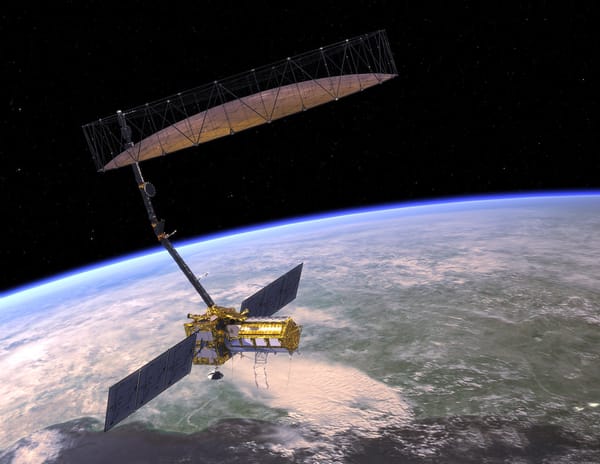
From 'Earth Imaging Satellite NISAR Exposes NASA's Weaknesses, ISRO's Strengths', NDTV, July 26, 2025: At the end of the day, the US scientists have swallowed their pride and are sheepishly going to watch the launch of a satellite where they have invested nearly $1.
Op-eds
Right now, Shubhanshu Shukla is on his way back to Earth from the International Space Station. Am I proud he’s been the first Indian up there? I don’t know. It’s not clear. The whole thing seemed to be stage-managed. Shukla didn’t say anything surprising, nothing
Analysis
There's no denying that there currently prevails a public culture in India that equates criticism, even well-reasoned, with pooh-poohing. It's especially pronounced in certain geographies where the Bharatiya Janata Party (BJP) enjoys majority support as well as vis-à-vis institutions that the subscribers
Analysis
Engineering as a methodology … contains a fundamentally materialist kernel, even if its present incarnation as a bourgeois science drives engineers to think and behave otherwise. — Nick Chavez, Engineers, Materialism, and the Communist Method After school, I studied mechanical engineering against my will. Most engineering students at the time did, and
Op-eds
NASA/SpaceX/Axiom will make their next attempt to launch the Axiom-4 mission to the International Space Station on June 11. Axiom Space's tagline for the mission is "Realizing the Return", alluding to three of the mission's four crew members, including India'